The best collection of modern European art in Miami during Art Week is not on the fair floor and not for sale. It is in the largest galleries of the Pérez Art Museum Miami, which has given them over, for the first time in its history, entirely to modern art. Picasso–Klee–Matisse: Masterpieces from the Museum Berggruen runs from October 29, 2026 to February 28, 2027: nearly 100 paintings, drawings, watercolors, collages and sculptures by Picasso, Klee, Matisse, Giacometti, Cézanne and Braque, curated by Natalie Zimmer of the Museum Berggruen and Maritza M. Lacayo of PAMM.
It is easy to walk through a show like this as a pilgrimage. It is more useful to read it as what it also is: a loan, with a history, an economy and an argument of its own.
A collection sold for a symbol, now earning its keep
Heinz Berggruen left Berlin for the United States in 1936, became a dealer in Paris and spent more than four decades assembling the collection. The collection arrived in the city he had fled in 1996, and in December 2000 sold 165 works to the Prussian Cultural Heritage Foundation for what was called a "symbolic" 253 million marks, against an estimated value at the time of 1.5 billion marks, as recorded in the museum's published history. That price is the founding fact of the museum. It was a gift that took the form of a sale.
Twenty-two years later the gift went on the road. The museum's home, the Stüler building opposite Charlottenburg Palace, closed in 2022 for a complete refurbishment: roof, façades, basement, climate and security systems, parts of it stripped back to the shell, according to the Prussian Cultural Heritage Foundation, which said in 2023 that it planned to reopen in 2026. The building is still shut. The collection, meanwhile, has been to Tokyo and Osaka, Shanghai and Beijing, Venice, Paris, Australia, Madrid and, from May to September this year, the Museum of Fine Arts, Houston, its first stop in the United States. Miami, as reported by EFE, is the tenth. PAMM puts the tour's audience at more than 1.5 million visitors.
There is nothing scandalous in that. Touring a closed museum's highlights is now standard practice, and it keeps the works in front of the public rather than in crates. But it changes what the works are for. In Berlin the Berggruen was a place, a collector's private sense of modernism installed in a building he chose. On tour it becomes a product with a recognisable name on the poster, which is exactly the kind of asset museums in a crowded December calendar need. The three names in the title are not a curatorial thesis. They are a brand.
What PAMM did with it
The interesting part is that PAMM did not simply hang the brand. The show is organised by theme rather than by artist: still life, portraiture, interiors, landscape and the emergence of Cubism. And into those rooms the museum has placed works from its own collection of Latin American modernism: Diego Rivera's Naturaleza muerta (1908), Joaquín Torres-García's Mujer con abanico (1924) and work by Wifredo Lam. Zimmer told EFE that the Berggruen works had never before been shown alongside Hispanic artists; PAMM's release frames the pairing around exile and migration.
This is the one room in the show that answers back, and it is worth being precise about why. A Rivera still life from 1908 is not a footnote to Picasso. It is a painter from Guanajuato working through the same Cézannean problem, in Europe, at the same moment, before either of them knew where it led. Torres-García in 1924 is already on the way to the constructive grid he would take back to Montevideo. Lam would later bring Picasso's lesson to Havana and turn it into something Picasso could not have painted. Hung beside Berggruen's Paris, these works stop the story from running in one direction, from Europe outward.
The limit is scale. Three or so works from Miami against nearly a hundred from Berlin is a conversation in which one side has the microphone. The pairing proves the point and then leaves it. A museum whose identity is built on the Americas, in a city that is, could have pushed the counterweight much further, and the show would have been more than the tenth stop of somebody else's tour.
The pictures that carry it
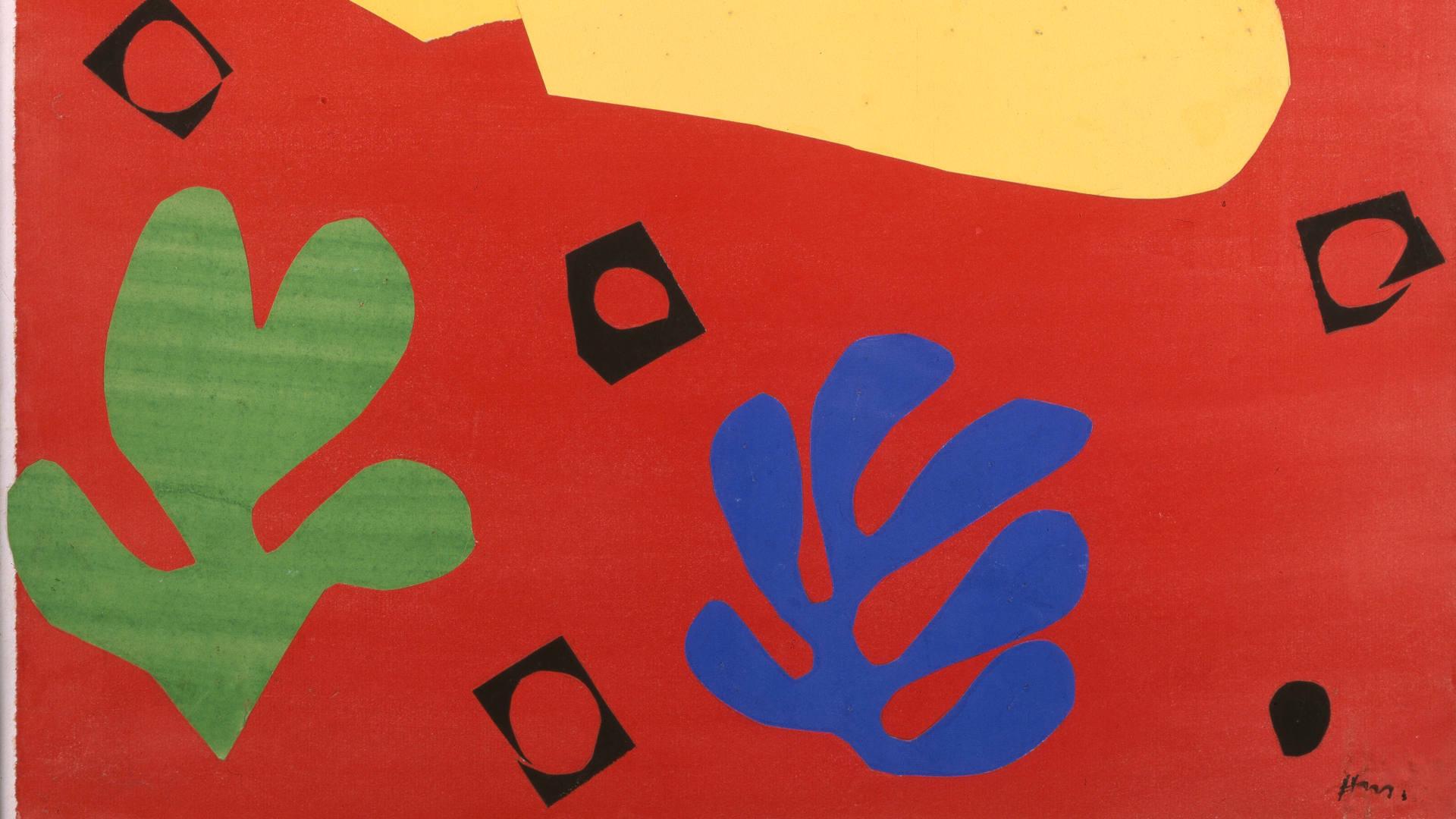
None of this should obscure the quality of what came from Berlin. Klee is the least familiar of the three names to an American public, and Landschaft in Blau (1917) is a small picture that rewards more time than anything on the fair floor will get. The Matisse cut-outs, including Éléments végétaux (1947), are the closest thing in the show to a sensation. Cézanne's Portrait de Madame Cézanne (around 1885) is there as the origin point. And Picasso runs, as Lacayo told EFE, almost the full length of his career, from early drawings to paintings made shortly before his death, ending with the 1904 Blue Period Portrait of Jaume Sabartés, the only Blue Period work in the show, which she called her favourite.
That last decision, ending on the beginning, is the smartest piece of hanging PAMM has described. It closes a show about late, confident modernism with a young painter and a friend in a cold room, before the market had heard of either of them.
What the loan tells us about the week
Miami Art Week sells the idea that the newest thing is the most urgent. Across the causeway, the museum show everyone will cross for is a century old, borrowed, and travelling because its home needs a new roof. That is not a contradiction. It is the market's oldest dependency in plain view: every price set on the fair floor is set against a canon, and the canon still lives in collections like Berggruen's, which a dealer built and then sold to a state for a fraction of what it would fetch.
PAMM's contribution is to suggest, for one room, that the canon was never only European. The suggestion is right. It deserved more than one room.
Exhibition dates, works, curators, thematic structure, the Latin American works from PAMM's collection, the first all-modern installation in PAMM's largest galleries and the tour audience figure from PAMM's exhibition page and press release. Tour stops and the Miami opening from the Staatliche Museen zu Berlin and its note on the Houston edition. Scope of the refurbishment and the planned reopening from the Prussian Cultural Heritage Foundation (September 7, 2023). The 2000 sale price, estimated value and number of works from the Museum Berggruen's published history. Quotes from Natalie Zimmer and Maritza M. Lacayo, the Picasso works named and the tenth-stop count as reported by EFE via Telemundo 51 (October 29, 2026). Press image courtesy of the Staatliche Museen zu Berlin. This is desk coverage.