On Wednesday, December 2, from 8 to 10 p.m., The Bass holds its Miami Art Week Exhibition Opening Reception, which the museum describes as the "premier evening" of its new exhibitions. It is the night the museum's members, artists and friends meet in Collins Park, a few blocks from the Convention Center, at the hour the fair's preview day winds down.
What makes it worth the walk is not the party. It is the work, and the institution behind it.
A museum that began as a gift
The Bass is the oldest art museum on Miami Beach, and its story is a civic one. In 1963, John and Johanna Bass gave the City of Miami Beach a collection of more than 500 works, Old Master paintings, textiles and sculpture among them, on the condition that a museum bearing their name would show it. The museum opened in 1964 in the former Miami Beach Public Library and Art Center, a 1930s Art Deco building by Russell Pancoast, grandson of the Miami Beach pioneer John Collins, which had already been the first public exhibition space for art in South Florida.
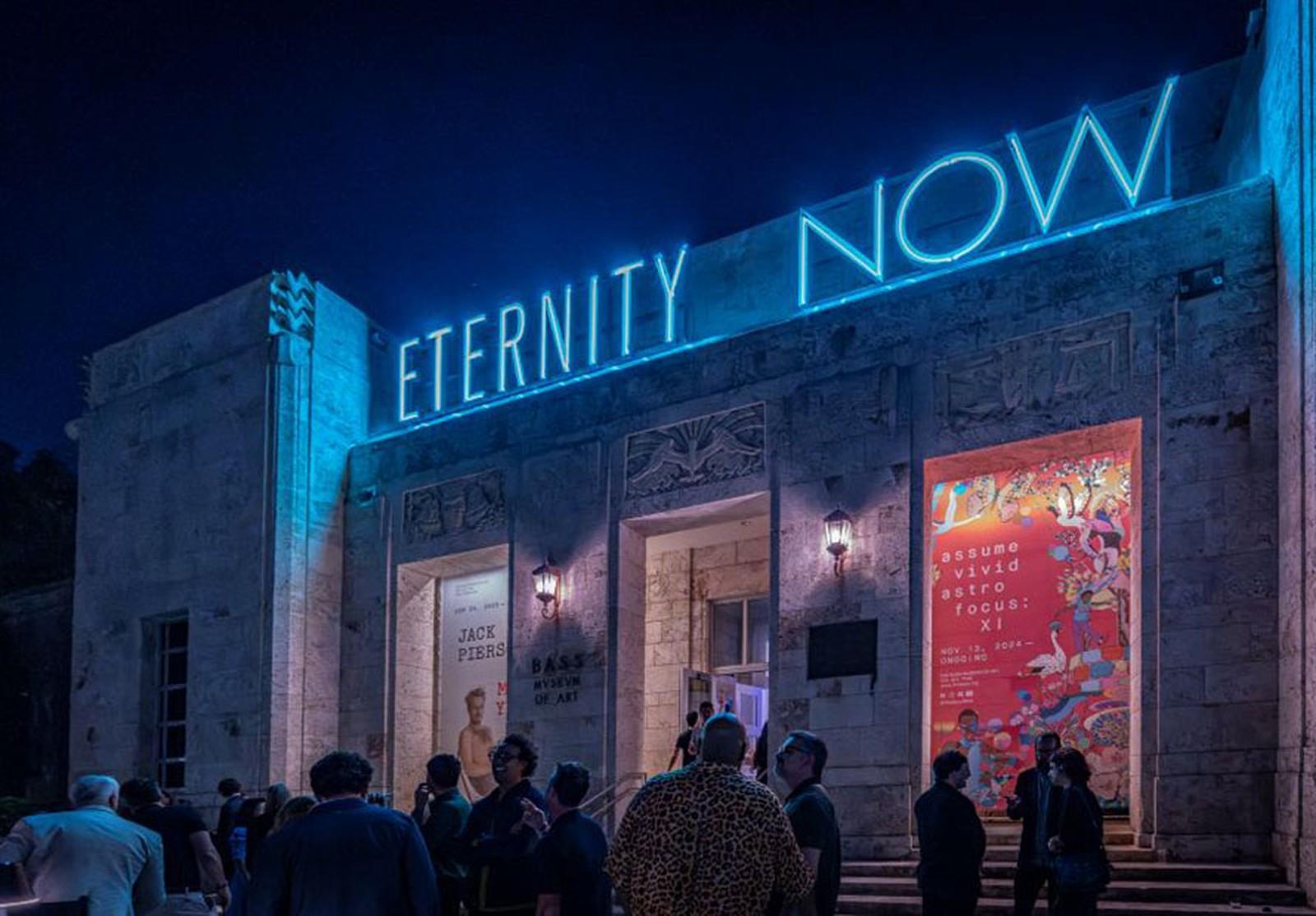
Arata Isozaki added a new wing in 2001, and with Isozaki and David Gauld the museum completed a full transformation that reopened on October 29, 2017. The neon on its façade, Sylvie Fleury's ETERNITY NOW, is the best summary of what the institution has tried to be since: a historic building that refuses to behave like one.
The artists on the walls
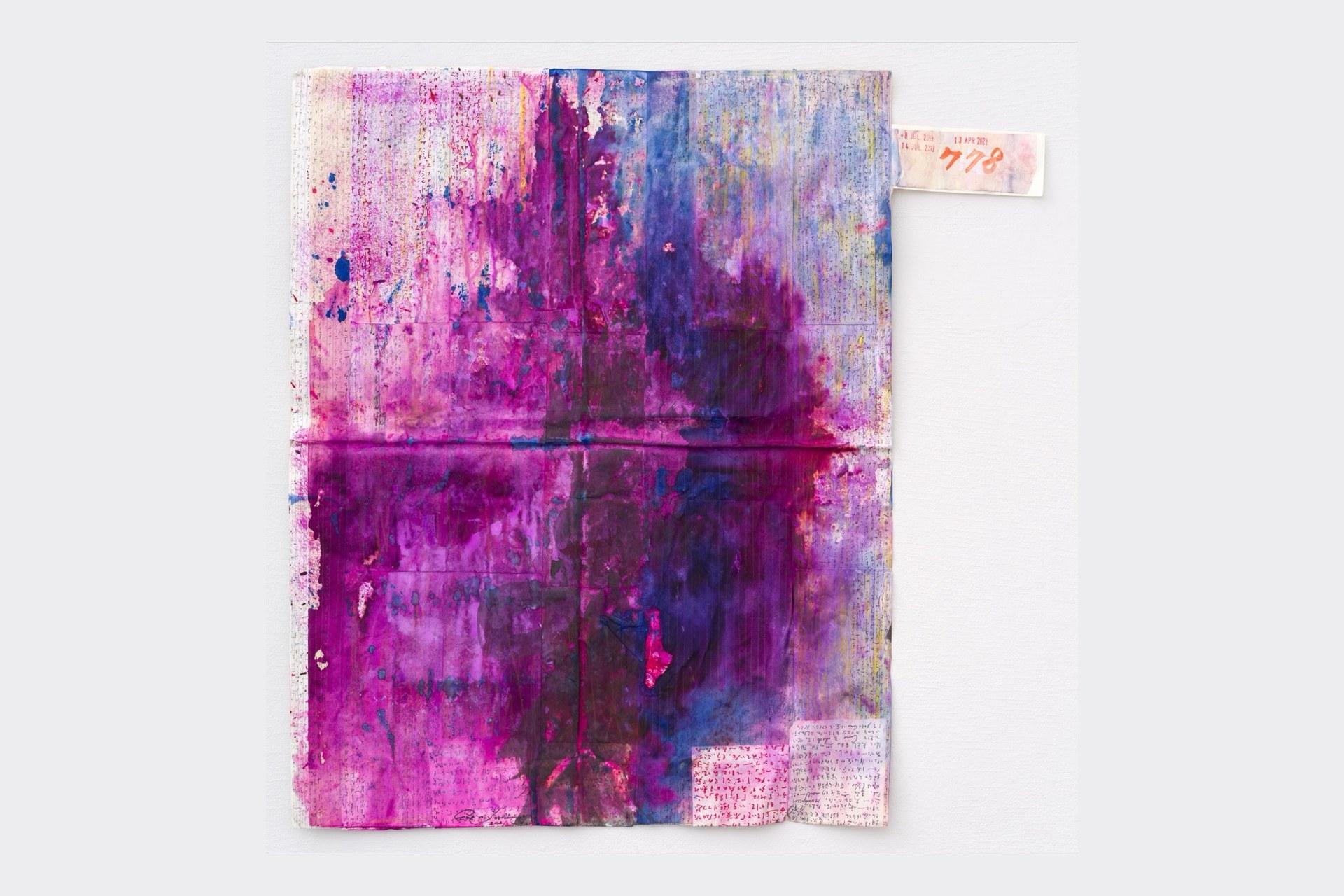
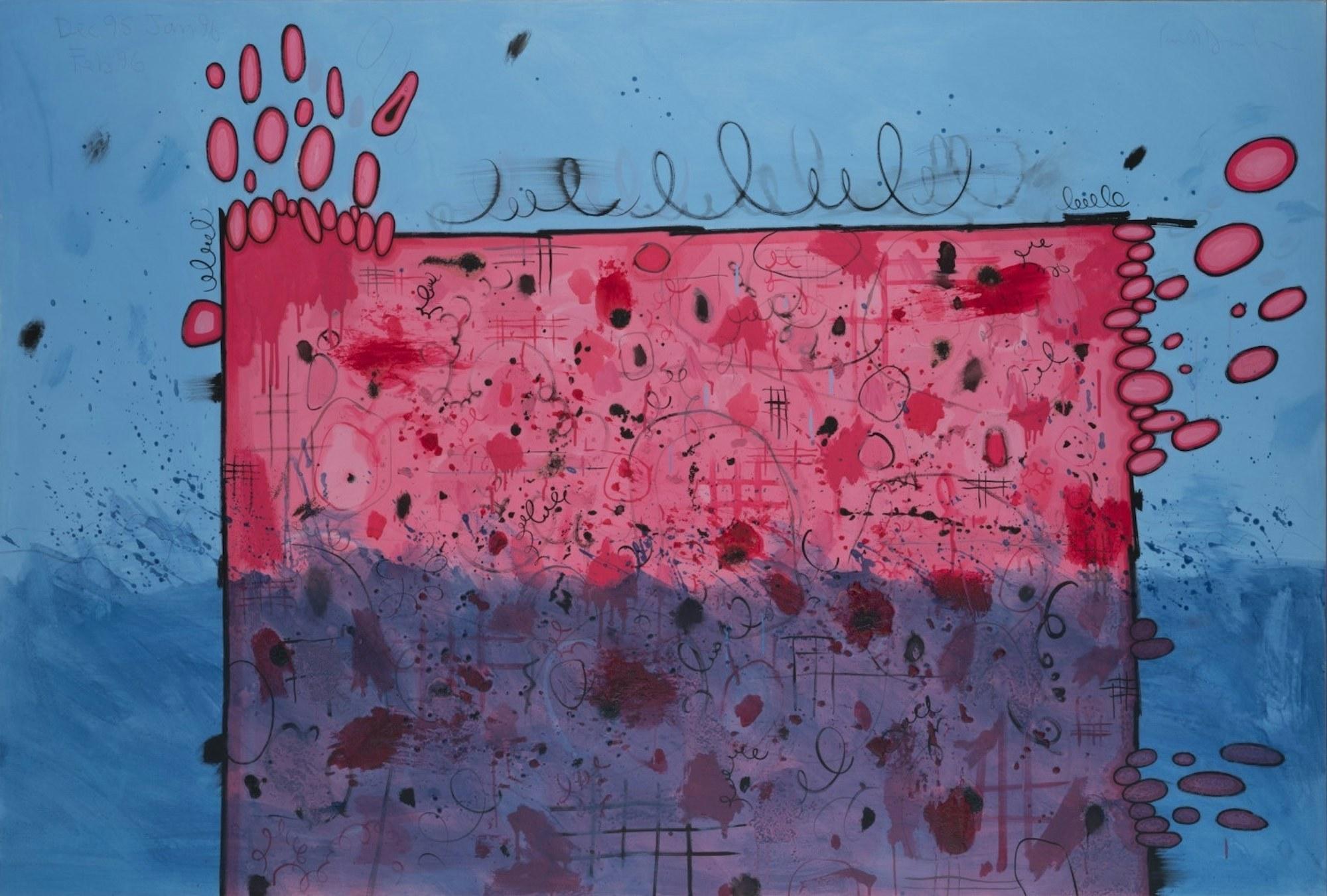
The reception gathers the museum's season, and the four artists it names are the reason to come:
- Yuko Mohri: Unviolated Imperfection (September 17, 2026 to May 30, 2027), the Japanese artist's first US museum exhibition: fruit that drives sound and light, water that leaks on purpose, systems built to fail. We wrote about why it is the most intelligent work on technology in Miami this December here.
- Pedro y Juana: AQUÍ (from October 28, 2026), a long-term installation by the Mexico City duo, on view into 2028.
- Sarah Zapata: Against a State of Malevolence (July 30, 2026 to February 28, 2027), textile environments that turn labour and tradition into architecture.
- Amalia Pica: Lecturas posibles in the Rotunda (September 17, 2026 to February 12, 2027).
Around them, the museum is also showing Abraham Cruzvillegas' Autocontusión and Gabriel Rico's mural, and in December it moves Susan Philipsz' sound work Too Much I Once Lamented into Collins Park, where anyone can hear it. The season was organised by associate curator Jasa McKenzie and executive director Silvia Karman Cubiñá.
Read together, the programme is a clear position: artists from Japan, Mexico, Peru and Argentina, working with fragility, craft and public space, in a museum founded to hold a European collection. That is how a 60-year-old institution stays current without losing what it was given.
A night with a history
The Bass has made Art Week its own for years. In 2021 its opening of Alex Israel's exhibition with Snapchat drew national coverage; in 2023 Hernan Bas's The Conceptualists opened in the same week. Its place in Collins Park makes it a natural meeting point between the fair and the city, and this year's reception continues that tradition.
For those who want the work without the crowd, the museum keeps extended hours every day of Art Week, from November 29 to December 6, 10 a.m. to 5 p.m.
We will report on the season after the week.
Date, time and the artists named for the reception from The Bass's event page. The museum's founding, the Bass donation, the Pancoast building and the Isozaki renovations from The Bass's history page. Exhibition titles, dates and curators from the museum's 2026–27 season announcement. Past Art Week openings from The Bass's news archive. Extended Art Week hours from the museum's events calendar. Image courtesy of The Bass. This is desk coverage.