The story of the fifth Art Basel Paris has been told twice on this site already: once as a sales report that barely noticed the early closure, and once through the public program that outlived it. Both were written in the days after the closure. A month on, the week is worth reading against what was actually happening outside the Grand Palais.
What the streets were about
The movement that closed the fair did not start in the art world, and it was not about the art world. As reported by Al Jazeera, it began in mid-September with high school students blockading their schools over dilapidated buildings, teacher shortages and an admissions system they consider unfair. By October it had become a national protest against the cost of living. On October 17, largely peaceful marches were followed by looting, vandalism and clashes, with thousands of businesses damaged and more than 2,000 people taken into custody, by official figures cited by Al Jazeera.
The following Saturday, October 24, was the day the fair's public was meant to arrive. According to the Interior Ministry, as reported by CNBC, 410,000 people marched across France, 110,000 of them in Paris, with unions putting the national figure at twice that. The Paris march was moved at the last minute to the city's southeastern edge. Some 70,000 police and gendarmes were deployed, soldiers patrolled the Champs-Élysées, and the Louvre, the Musée d'Orsay and the Paris Opera closed for the day. More than twenty metro stations were shut. A 22-year-old arts student told CNBC: "We shed tears for shops, not for the people who are being impoverished all year round."
That sentence is the best thing anyone said about the week, and it was not said about Art Basel. It should be read alongside it anyway.
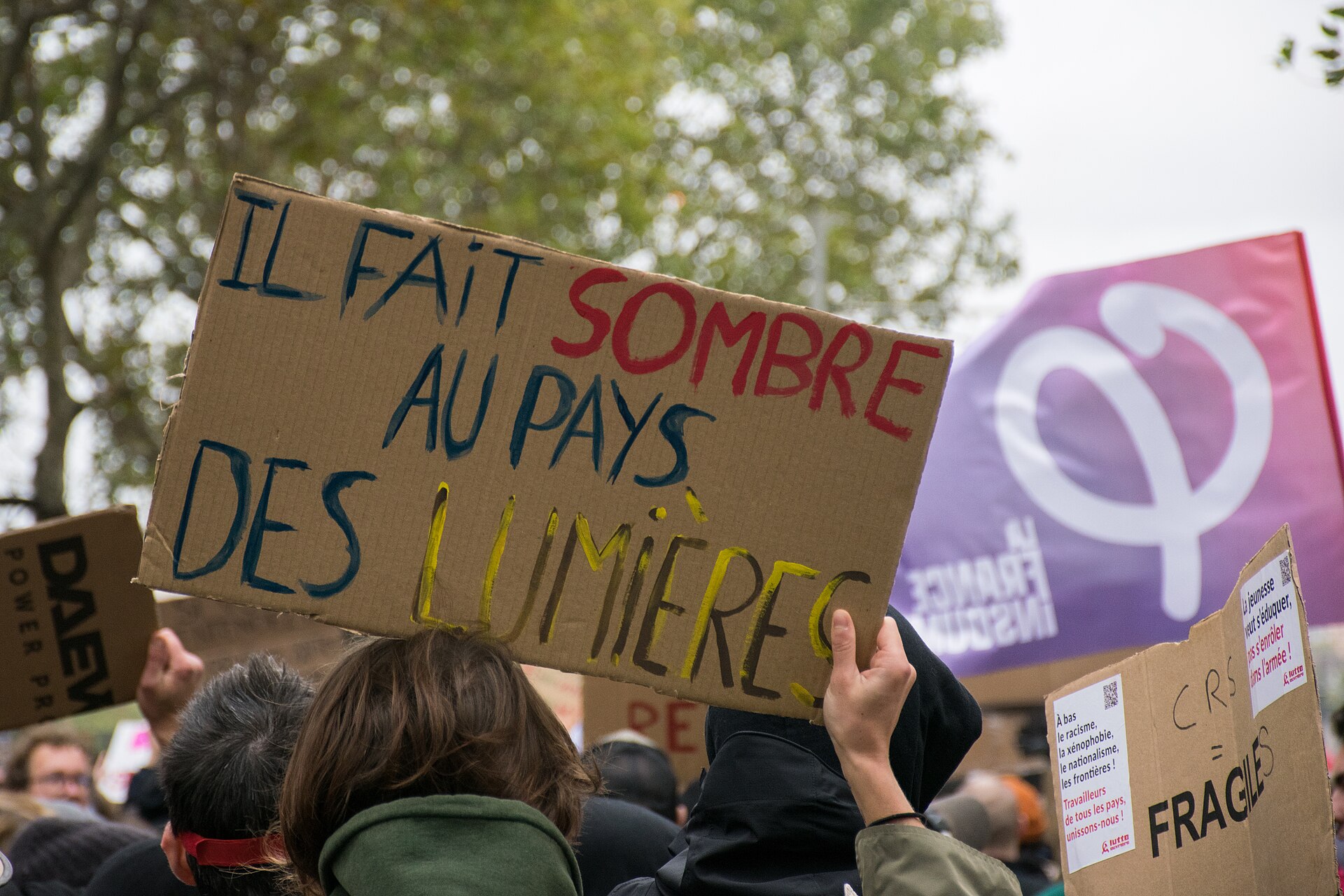
The week's most articulate images were made by hand, in cardboard and paint, on the same days that the most expensive art in the country was hanging in a closed building. A placard that turns the Enlightenment against the Republic is not a work of art, but it is a piece of visual rhetoric that knows exactly where it is standing, and it belongs in any honest account of what Paris looked like that weekend.
The palace as a target
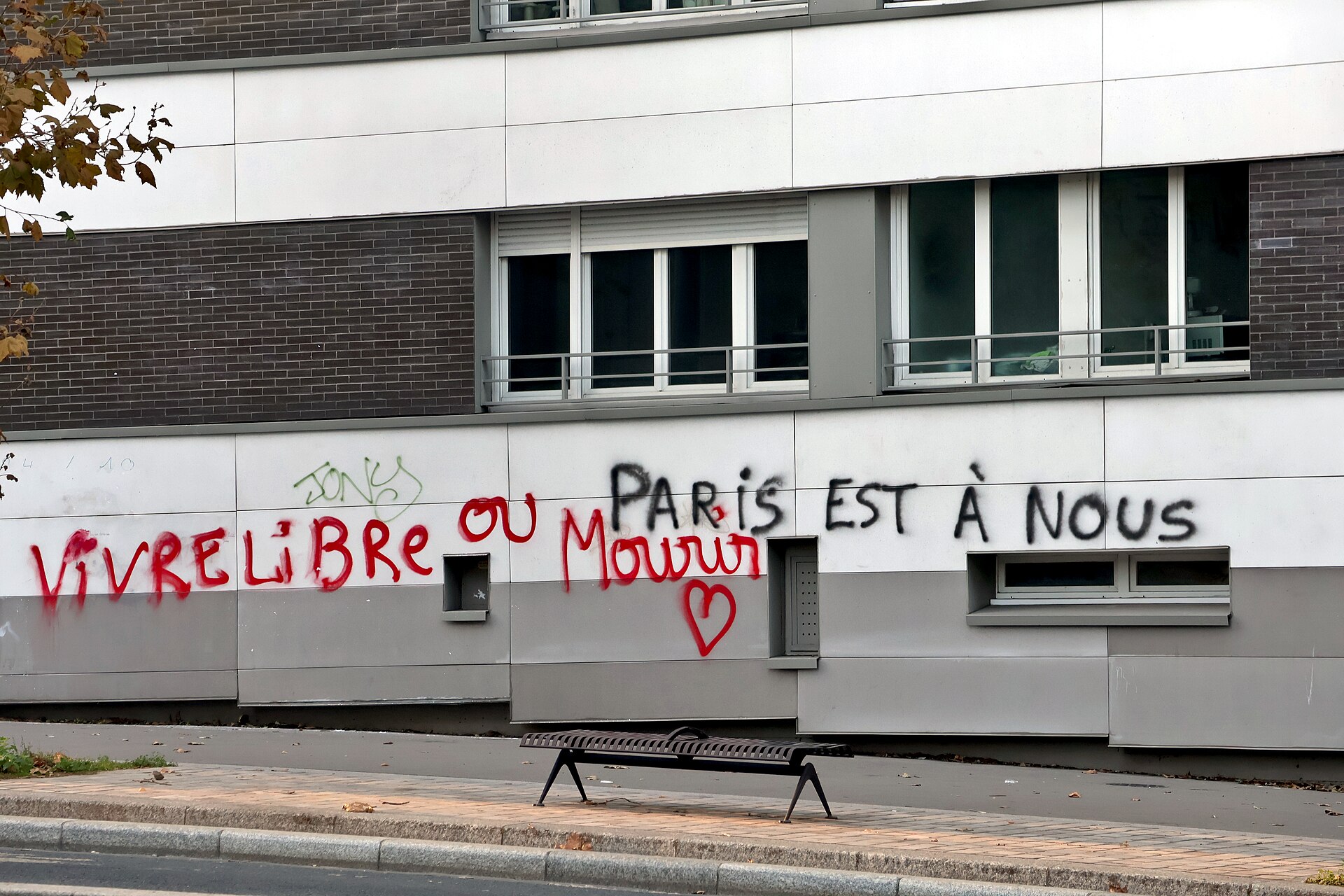
Art Basel did become a target, by name. As reported by Monopol, on October 20, the day of the Avant-Première, an Instagram account relayed a call from a collective called Pillage de classe to gather outside the Grand Palais on the Saturday, under the heading "REPRENONS LE PALAIS". The post called Art Basel "la foire du pillage" and attacked James Murdoch's Lupa Systems, the largest shareholder in the fair's parent MCH Group, for investing more in arms than in art.
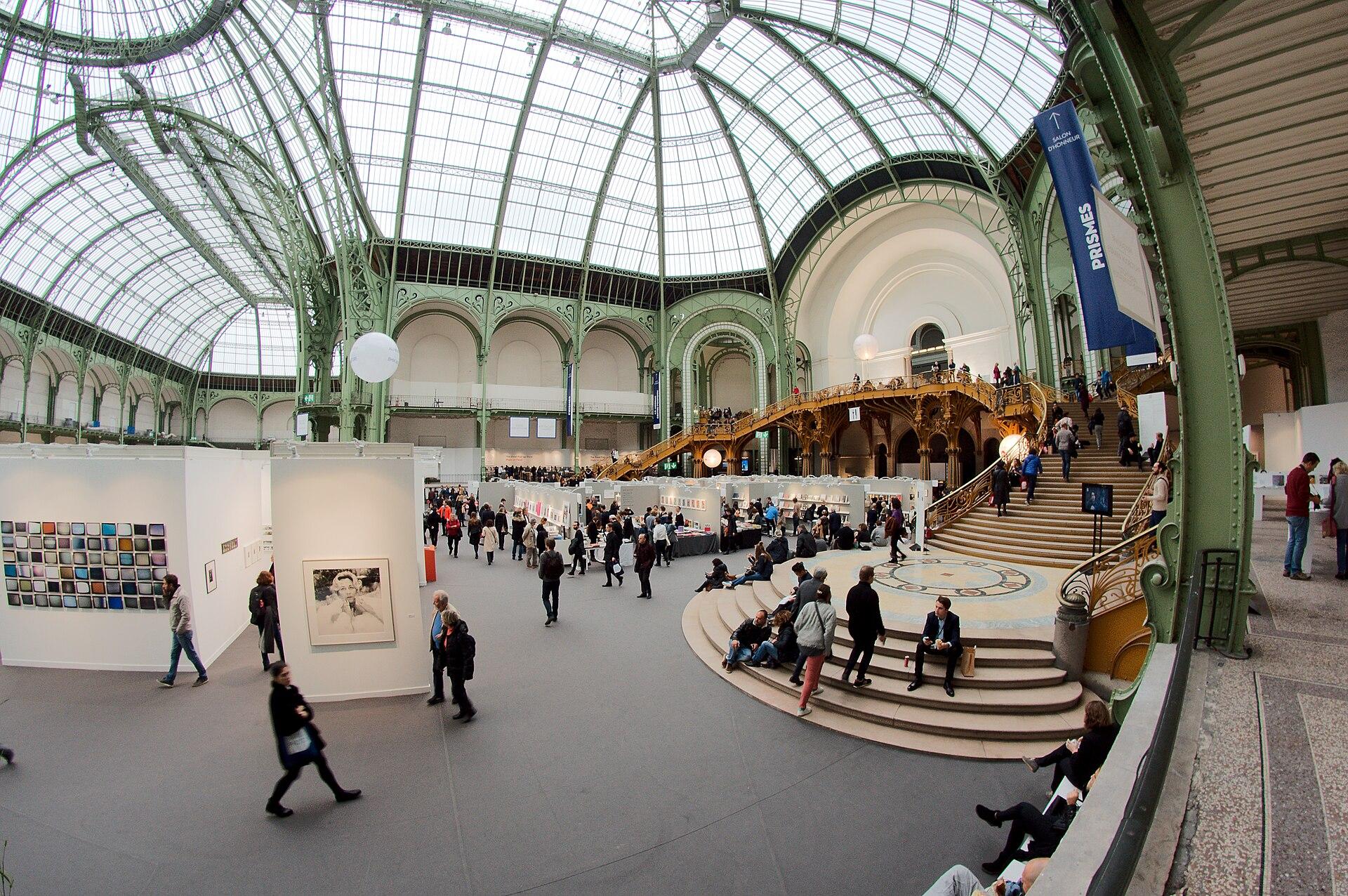
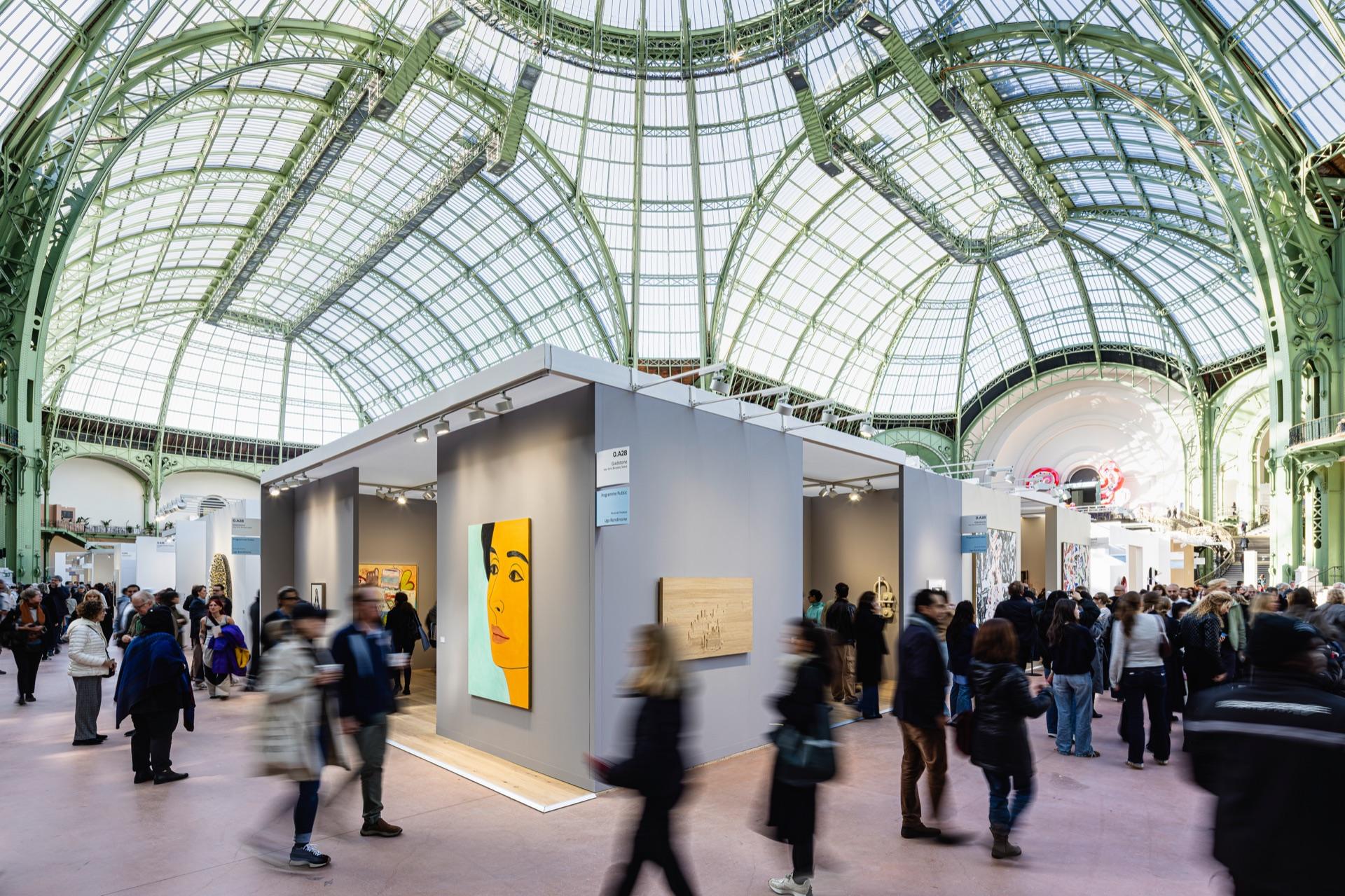
One can find the rhetoric crude and still see what it registered. For two years Art Basel Paris has sold itself as the fair that belongs to the city: the Grand Palais restored, a public program spread across Paris, a weekend for the people who buy a ticket. The protest read the same building the other way round, as a palace of private wealth in a month when the argument in the street was about who can afford to live in Paris at all. The fair's own calendar made the point for them. The room that mattered commercially, a Tuesday afternoon with six invitations per gallery, had already happened. The part of the edition that was open to the public was the part that could be closed.
A hard call in a hard week
Exhibitors were told on Thursday, October 22, that the fair would end at 7pm on Friday. Art Basel said, as reported by Monopol, that the decision followed "discussions with galleries and relevant authorities, including the Paris Police Préfecture." It was a decision taken in a week when the state itself was closing the Louvre and the Orsay, and it is hard to fault the instinct. The French galleries' trade body, the Comité Professionnel des Galeries d'Art, accepted the Saturday closure as "a matter of prudence" in a letter to the fair, while asking to be more closely involved in such decisions in future. That is a reasonable request, and the kind of conversation a fair this young in a city should want to have.
The route the public did not take
The closure is usually described as the fair losing its weekend. It is more accurate to say that the city's public lost a route. On Saturday, October 24, the people who might have walked from the Champs-Élysées into the Grand Palais, on to the Petit Palais and down to the Trocadéro found a palace shut, two of the largest museums in the country shut, metro stations closed and soldiers on the avenue. The march that did happen was sent to the southeastern edge of the city, as far as possible from all of it.
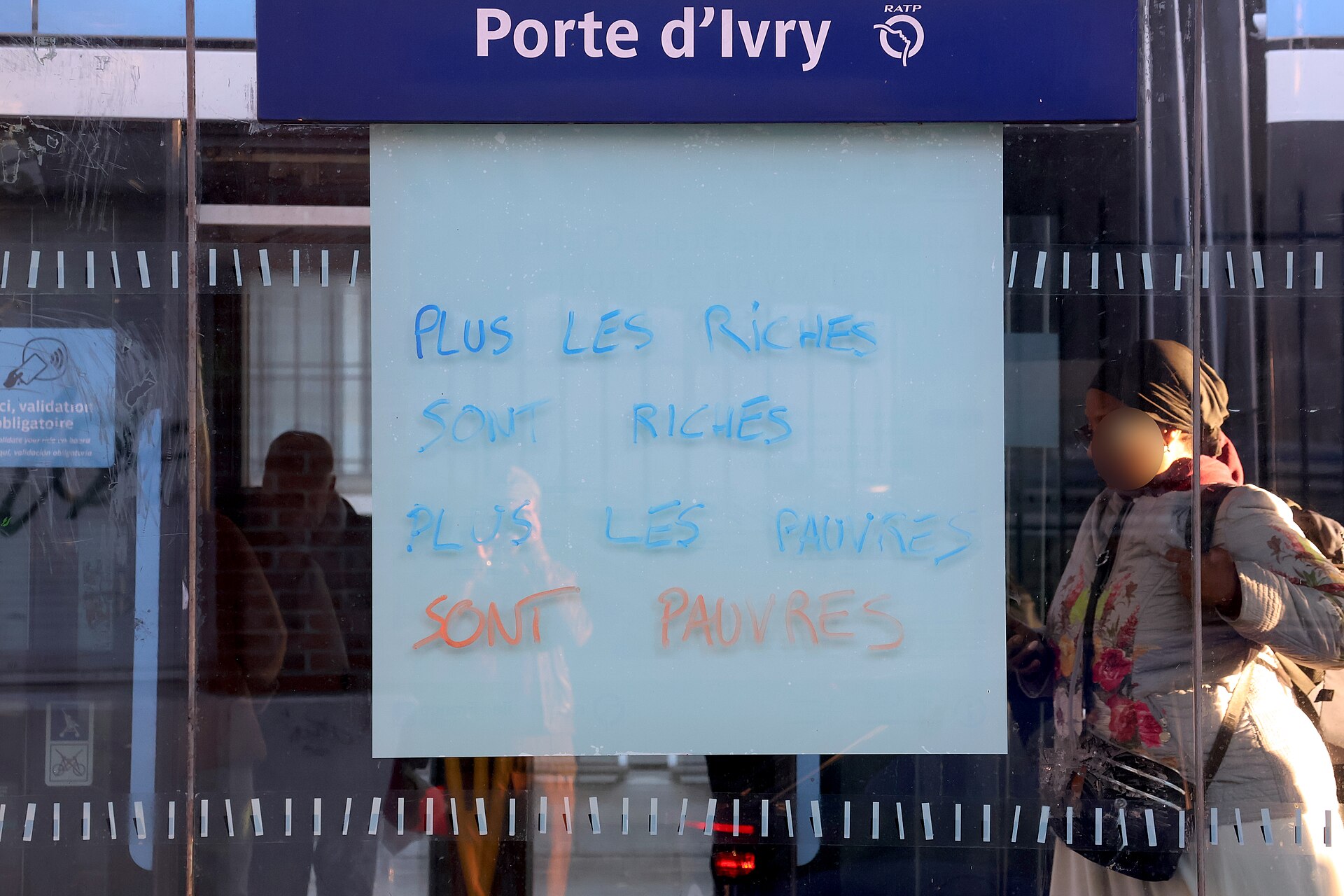
The city's walls kept the record the institutions could not. A week after the march, the slogans were still on the shelters and shopfronts of the 13th arrondissement, hand-lettered, legible and public, which is more than could be said that Saturday for the art in the centre.
Those are not the fair's decisions, and Art Basel did not make the police plan. But they produced, for one weekend, a map of Paris with the institutions in the centre closed and the public routed around them. Art Basel's program was designed to argue the opposite: that a fair can open a city rather than wall part of it off. As we wrote at the end of October, the projects that survived were the ones with their own calendars, such as Tracey Emin's bronzes at the Trocadéro and Kennedy Yanko's sculptures at the Cité de l'architecture. The projects that existed only for the fair's five days lost their audience along with the building.
What the fair should take from it
Closing on the Saturday was right, and nobody serious argues otherwise. The lesson is structural rather than a reproach. A fair whose civic argument rests on a public weekend, while its commercial heart beats on a private Tuesday, will always find that the weekend is the part that can be let go. That is worth knowing in advance.
Art Basel Paris will be back at the Grand Palais next October. If it wants the city to keep reading the building as public, the projects that held up this year point the way: more of the program anchored in institutions with their own calendars, so that the next time the street and the fair collide, the public still has somewhere to go.
Origins of the protest movement, the October 17 looting and custody figures, and the October 24 security deployment and museum closures from Al Jazeera (Virginia Pietromarchi, October 24, 2026). Turnout figures, the relocation of the Paris march, soldiers on the Champs-Élysées, metro closures and the student's quote from CNBC (October 24, 2026). The "Reprenons le Palais" call, Art Basel's statement on the decision and the CPGA letter as reported by Monopol (Jeni Fulton, October 30, 2026; the author previously worked for Art Basel). Photographs of the October 24 march and its route from Wikimedia Commons, by Jules and FreCha, under CC BY-SA 4.0. Lead image courtesy of Art Basel, from its Paris 2026 press dossier. This is desk coverage.*